
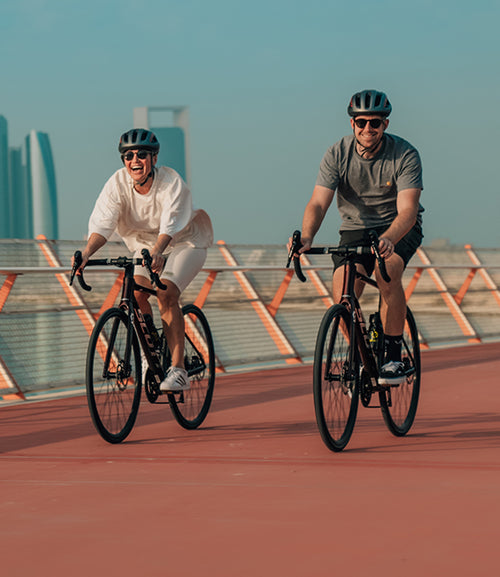




Is it safe to cycle in Dubai? Yes, and for a beginner it is one of the easiest big cities in the world to start in. The reason is simple: Dubai had built 636 km of dedicated cycle tracks by the end of 2025, most of them completely separated from cars, free to use, and open around the clock. You can ride your first 20 km here without ever sharing tarmac with a vehicle. Riding on open roads is a different question, and we will get to it, but it is not where anyone needs to begin.
We have been helping people take their first rides in the UAE for 24 years, and the question we hear most often from someone standing in the shop for the first time is some version of “but is it actually safe out there?” So here is the honest answer, with the numbers, the places, and the habits that make it work.
Where the Question Comes From
Anyone who has driven along Sheikh Zayed Road can picture what cycling in Dubai might look like, and the picture is not reassuring. Six lanes, 110 km/h, nowhere to be on a bike.
The thing is, nobody cycles there. It is not allowed, and it is not where cycling in this city happens. Dubai’s answer to the traffic question was to build a separate network for bikes rather than to squeeze riders into the margins of highways. That decision is why Al Qudra exists, why Nad Al Sheba has floodlights and showers, and why the beach track runs for 16 km along Jumeirah with the Burj Al Arab in view.
When you cycle in Dubai, you are mostly cycling on infrastructure built specifically for you.
What the Numbers Say
The numbers tell a more encouraging story than the highway view.
Dubai had 636 km of dedicated cycle tracks by the end of 2025, and the RTA plans to reach 1,000 km by 2030, linking Jumeirah and the Marina out to Al Qudra and Nad Al Sheba. Al Qudra alone is 86 km of car-free tarmac. Nad Al Sheba runs floodlit laps 24 hours a day. Thousands of people ride these tracks every week, and on a winter weekend morning the Al Qudra car park fills before sunrise.
The Handful of Rules Worth Knowing
Dubai does regulate cycling, and the rules are short enough to remember on one hand. They exist for your benefit, and following them is most of what “riding safely” means here.
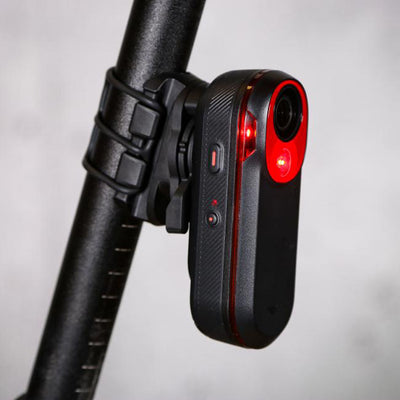
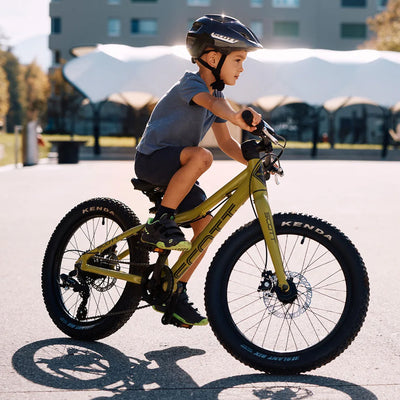
Wear a helmet and a reflective vest, every ride. Ride on cycle tracks where they exist, and on roads only where the speed limit is 60 km/h or lower. Keep to the right, ride with the flow of traffic, and get off and walk across pedestrian crossings. Fit a white light at the front and a red one at the back. Children under 12 ride with an adult.
That is the core of it. Fines exist for ignoring these, but we would rather you think of them as the local riding culture than as a rulebook. Everyone on the tracks is following the same conventions, which is part of what makes the tracks feel so calm.
A note on tracks and speed: urban tracks shared with pedestrians, like the Jumeirah beach path, have a 20 km/h limit. Nad Al Sheba allows 30 km/h. Al Qudra, which is out in the desert and built for training, has no specified speed limit.
Where to Ride Your First Few Weeks
This is the part we are most enthusiastic about, because Dubai’s tracks are a gift to a new rider.
Nad Al Sheba Cycle Park. Next to Meydan, with 4, 6 and 8 km loops. The whole course is floodlit, it is open 24 hours, and there are showers and changing rooms. The loops are smooth, flat and wide, and you can ride them at whatever pace feels comfortable while stronger riders pass on the outside. If we had to pick one place for a first ride, this is it.

Al Qudra. About 50 km south of Downtown, out past Arabian Ranches, and the place most riders in Dubai end up calling home. It is an 86 km network of car-free desert tarmac with a 50 km main loop, shorter options from around 18 km, and water stations roughly every 10 km. You may well see oryx. You will also see the sunrise, because that is when the regulars ride. We run a rental fleet at Last Exit Al Qudra, right at the trailhead, so you can try the track before owning a bike.
Jumeirah Beach Track. 16 km of coastal path with the sea on one side. It is shared with walkers and runners, so the pace is gentle, which makes it ideal for getting used to a bike again. Stop for coffee at Kite Beach.

Al Khawaneej and Mushrif. A 19 km track through Al Khawaneej that links into Mushrif Park, where there are also beginner-graded mountain bike trails if you fancy some dirt.
We keep a longer list, with map links, on our Safe Places to Ride page, covering Dubai, Abu Dhabi, Al Ain, Sharjah and beyond.
The Habits That Build Confidence
Beyond the rules, a few practices turn a nervous first ride into a routine.
Ride early. The tracks are busiest and most social between 5:30 and 8:00 in the morning, and in summer that is also when the temperature is manageable. From June to September we ride at dawn, carry two bottles, and are off the bike before the heat sets in.
Be predictable. Hold your line, signal before moving across, and look over your shoulder before changing position. Faster riders will pass you cleanly if they can read what you are doing.
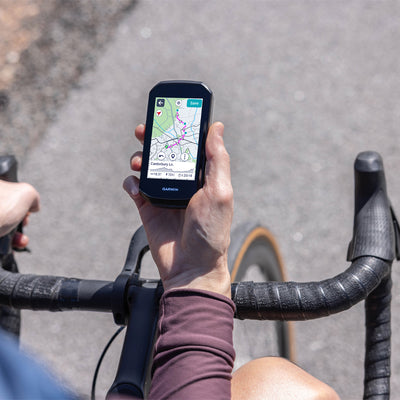
Use lights even in daylight. A rear light on a bright day makes you visible from much further back. Our rental bikes come with front and rear lights fitted for exactly this reason.
Start with a loop, not a destination. A closed circuit like Nad Al Sheba lets you stop whenever you want. Point-to-point rides can wait until you know your range.
And when you are ready for company, ride in a group. Our Rides page lists our community rides, and our Group Riding Etiquette guide covers the hand signals and calls that make a bunch move safely together. Riding with people who know the tracks is the fastest way to learn them.
Your First Month, Simply
You do not need to buy a bike to find out whether you enjoy this.
Rent one. Our rental bikes start from AED 50 an hour, a carbon road bike is AED 200 for the day, and a helmet is AED 50 if you do not have one yet. The bike comes with lights, a saddle bag with a spare tube, a pump and bottle cages. Collect at Last Exit Al Qudra, our Flagship in Al Quoz, or Al Hudayriyat Island in Abu Dhabi.
Ride a loop. Nad Al Sheba or the short Al Qudra option. Go at dawn. Stop when you feel like it.
Do it again a week later. Most people find the second ride is where it clicks.
If you decide you want your own bike, come and talk to us. A bike that fits properly is safer to ride, because it handles the way you expect it to, and our bike fitting service sorts that out before you buy. Our Welcome to Cycling page walks through the different kinds of riding and what to look for in a first bike.
Dubai did the hard work of building the tracks. All that is left is to turn up.

Frequently Asked Questions
Is it safe to cycle on the roads in Dubai?
Yes, but where you ride matters. Dubai has dedicated cycling tracks that allow you to ride away from vehicle traffic. Cycling on roads with speed limits above 60 km/h is prohibited, and roads with lower limits are not automatically suitable for beginners. Highways such as Sheikh Zayed Road, Emirates Road and Al Khail Road are off limits to bicycles. For your first rides, dedicated tracks like Nad Al Sheba and Al Qudra are the best places to start.
Do I need a helmet to cycle in Dubai?
Yes. A helmet and a reflective vest are required for cyclists in Dubai. Wolfi's offers helmets from brands including Kask and ABUS, and rental helmets are available for AED 50.
Where is the safest place to cycle in Dubai for a beginner?
Nad Al Sheba Cycle Park is our first recommendation, with its floodlit 4, 6 and 8 km loops, showers and 24-hour access. Al Qudra's shorter loops and the Jumeirah Beach Track are also excellent options for beginners looking to build confidence.
Do I need a licence or insurance to ride a bicycle in Dubai?
No. Regular pedal bicycles do not require a driving licence, registration or mandatory insurance in Dubai. However, cyclists must follow local traffic regulations, use permitted cycling routes and wear the required safety equipment.
Can I cycle in Dubai during summer?
Yes, with a few adjustments. Ride early in the morning before temperatures rise, carry plenty of water and keep your rides short. Floodlit cycling tracks such as Nad Al Sheba also make evening riding possible, although temperatures and humidity can remain high after sunset.
How do I join a group ride in Dubai as a beginner?
Start by exploring the community rides listed on Wolfi's Rides page and reading our Group Riding Etiquette guide. Choose a beginner-friendly ride, check the expected pace and distance, and let the ride leader know it's your first time. Riding with experienced cyclists is a great way to learn and build confidence.


